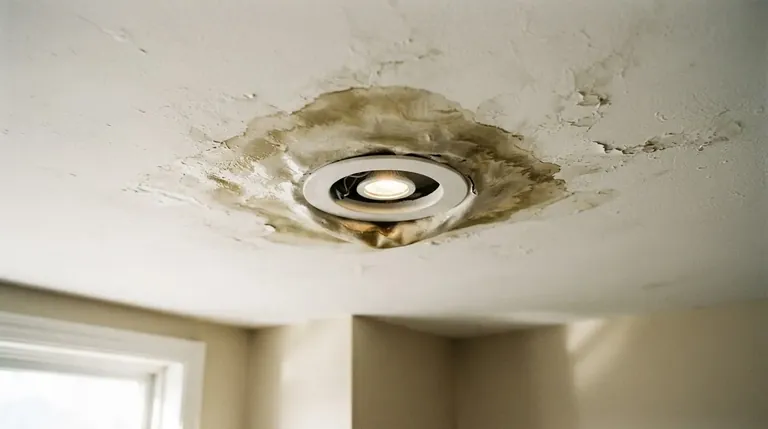
Ceiling Leak Water Damage in Missouri City, TX: First Steps
A stained or sagging ceiling can mean water is collecting above it; keep people out from under it and let a qualified provider trace the source.
Request Water Damage HelpA Wet or Sagging Ceiling Is a Safety Issue First
A ceiling that is stained, bulging or dripping can mean the drywall or plaster above it is saturated and losing strength. Treat a sagging section as a collapse risk, not just a cosmetic problem, until someone has looked at what is happening above it.
- Keep people and pets out of the room directly under a bulging or sagging area.
- Do not touch a light fixture, ceiling fan or outlet near the wet area; water and electricity near a ceiling fixture is a shock and fire risk.
- Use your home's main shut-off valve if you can reach it safely; do not force a valve you cannot operate, and seek qualified help instead.
FEMA and Ready.gov advise: do not touch electrical equipment when it is wet or while standing in water, and only shut off power at the main breaker if it is safe to reach.
Read the full safety guidance in FEMA's flood fact sheet.
Find the Source Before You Patch Anything
A ceiling leak can trace back to plumbing, the roof, an HVAC line or the water service itself, and each source points to a different professional. Rather than guess at the cause yourself, describe what you see to the provider you call so they can trace it correctly.
- Plumbing above the stain, such as a bathroom or kitchen line: a licensed plumber.
- The roof or attic: a roofing contractor.
- An HVAC unit or condensate line in the attic: an HVAC technician.
- The water service line itself: a plumber, or your MUD operator if it traces back to the service connection.
If you are not sure which utility serves your address or suspect the water is coming from the service line itself rather than your home's plumbing, see who to call first in Missouri City to confirm your MUD operator before you assume the source.
Water in the house right now? Leave your number.

Generic Water Categories, in Plain Language
Not all ceiling water is the same. Clean supply water from a fresh leak is different from water that has picked up contamination on its way down, and that difference affects how carefully the area needs to be handled. None of this depends on how long the leak has been running.
- Clean supply water, such as from a fresh supply-line leak, generally carries the least contamination risk.
- Used or gray water, such as from an appliance drain or a longer-standing leak, carries more risk and should be handled more cautiously.
- Water that has contacted sewage or floodwater carries the most risk and calls for more caution around contact and cleanup.
This is general, practical guidance, not a technical classification system. A provider assessing the damage in person can tell you more about what category applies to your specific ceiling leak.
Permits for Ceiling and Drywall Repair
Whether a ceiling repair needs a permit depends on the scope of the work and whether your address is inside Missouri City limits. Ask the city's Development Services and Inspections Division whether your specific repair needs a permit before you start; do not assume based on how small the repair looks.
- Inside Missouri City limits: the Development Services and Inspections Division decides whether your repair needs a permit.
- Outside city limits: the county office for your address issues the applicable permit instead.
- Ask about your specific repair rather than assuming a small drywall patch is automatically exempt.
For general guidance on what a Texas homeowners policy typically covers once the repair is underway, see TDI's consumer guide on water damage and mold.

Insurance: What a Ceiling Leak Usually Triggers
Whether a ceiling leak is covered often depends on how sudden it was. Most standard policies generally cover a sudden and accidental discharge, subject to your policy's terms and deductible, while continuous leakage or seepage that built up over time is typically excluded. This page is general information, not legal or insurance advice.
- A pipe that bursts suddenly above the ceiling is typically treated differently from a slow leak that built up gradually over time.
- Document the stain, the drip and any visible damage with photos before repairs begin.
- Ask your insurer directly how your specific policy treats the type of leak you have.
If the ceiling leak has been going on long enough that mold has started, Texas licensing rules for mold work apply once the affected area reaches 25 contiguous square feet — see mold after water damage in Missouri City for what that means for hiring a contractor.
Insurance Timelines Once You File
Texas Insurance Code Chapter 542 sets deadlines for how insurers must handle a claim once you notify them, though the deadlines run on different clocks depending on the stage of the claim. Each clock starts on a different event, so track them separately rather than as one countdown.
Swipe to see all columns →
| Stage | Deadline | Checked |
|---|---|---|
| Insurer acknowledges and begins investigating your claim | Not later than the 15th day after the insurer receives notice of the claim (an eligible surplus lines insurer has until the 30th business day), §542.055 | Checked: September 2026 |
| Insurer accepts or rejects the claim | Not later than the 15th business day after the insurer receives all required items, statements and forms, §542.056 | Checked: September 2026 |
| Insurer pays an accepted claim | Not later than the fifth business day after the date notice of payment is made, §542.057 | Checked: September 2026 |
| Extension during a weather-related catastrophe | An additional 15 days, as defined by the insurance commissioner, §542.059 | Checked: September 2026 |
These deadlines apply to the insurer's process once you have filed, not to whether the ceiling leak itself is covered. If you believe your insurer is missing these deadlines, the Texas Department of Insurance consumer help page explains how to file a complaint.
If That Did Not Work
A ceiling leak that keeps coming back, or a repair that does not hold, usually means the source was not fully fixed the first time. Here are three ways to move forward instead of repeating the same repair on the same spot.
- Try again: if the stain returns after a plumbing repair, the leak may be at a different point in the same line; ask the plumber to re-check the full run before assuming a new problem.
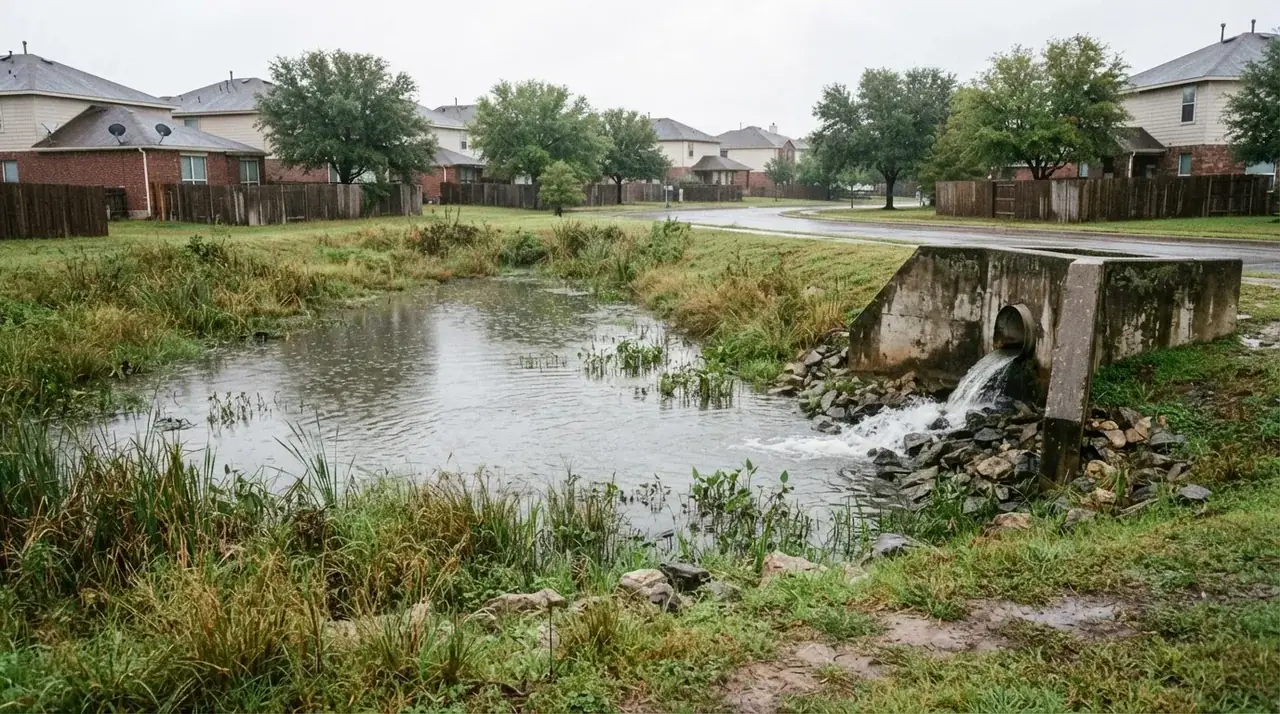
- Try another route: if a roofer and a plumber each say the source is not theirs, get an assessment in writing from each so you can compare findings, and see the Missouri City water damage overview in case the water is entering from outside rather than from a fixture.
- Who to contact: for a dispute about what your homeowners policy covers or pays, contact the Texas Department of Insurance consumer help line at 800-252-3439, 8 a.m. to 5 p.m. Central, Monday through Friday.
Frequently Asked Questions
Is it safe to stay under a sagging ceiling while I wait for someone to look at it? ▾
How do I know if the leak is from the roof or from plumbing? ▾
Do I need a permit to repair ceiling drywall in Missouri City? ▾
Will my homeowners insurance cover a ceiling leak? ▾
How long does my insurer have to respond once I file a ceiling leak claim? ▾
Can I patch the ceiling myself while I wait on the insurance claim? ▾
What if the leak has been going on long enough that I can see mold starting? ▾
Request water damage help
Describe the damage. We pass your request to a restoration company serving your area, which contacts you to arrange an inspection.